
Building Core Competencies: The Heart of Kenya's CBC Curriculum
The Competency-Based Curriculum shifts the focus from rote memorization to practical skill-building. This guide breaks down the seven core competencies and how to foster them daily.
For decades, the Kenyan education system prioritized the accumulation of facts. Success was measured by a student's ability to recall information accurately during a high-stakes examination. The Competency-Based Curriculum represents a fundamental philosophical shift.
CBC is designed to teach learners how to learn, not just what to learn. At the center of this framework are the seven core competencies. These are not separate subjects to be taught in isolation. They are interwoven skills that should be developed across all learning areas, from Mathematics to Creative Arts.
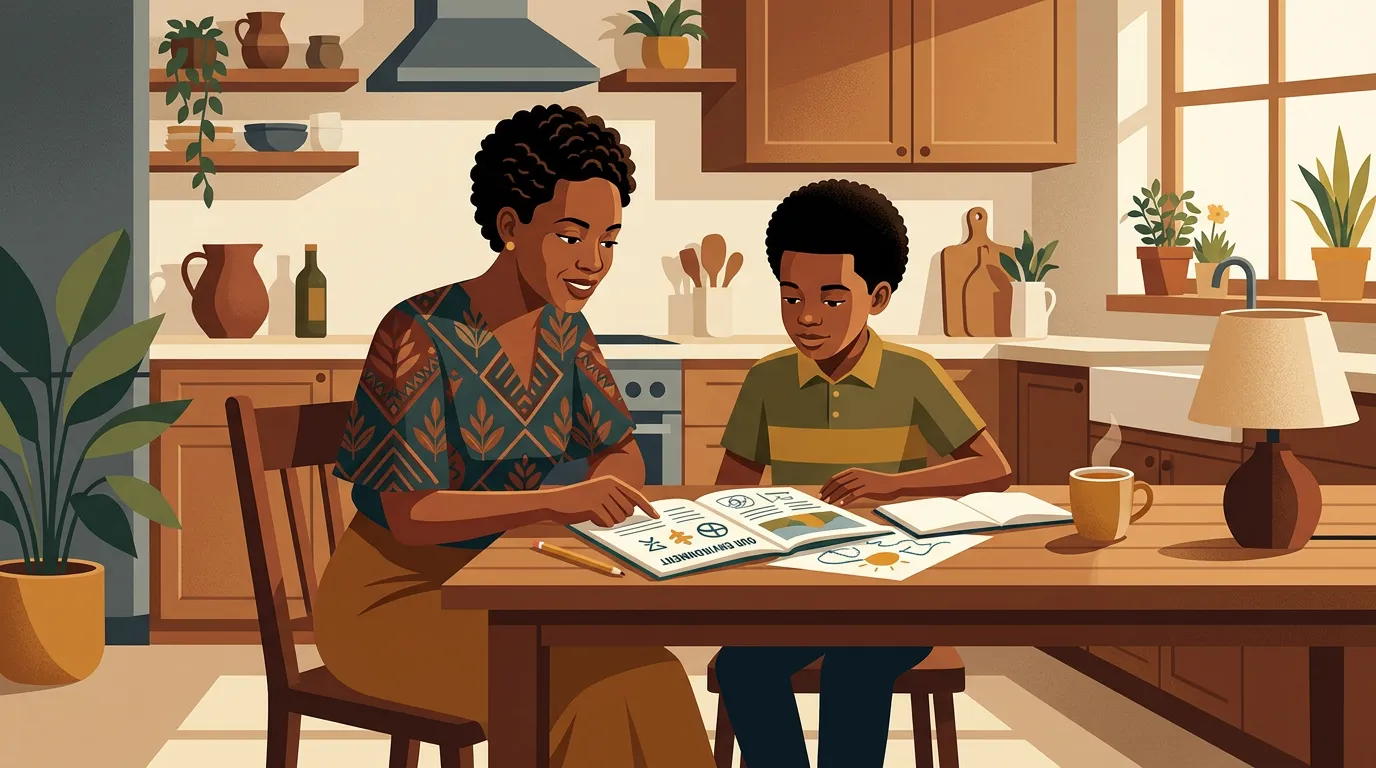
Whether you are a teacher planning a lesson or a parent guiding homework, understanding these competencies is essential. They provide the blueprint for raising adaptable, innovative, and responsible citizens prepared for the demands of the 21st century.
The Seven Core Competencies Explained
The Kenya Institute of Curriculum Development (KICD) has identified seven specific competencies that form the foundation of the CBC framework. Each plays a distinct role in holistic learner development.
Communication & Collaboration
Expressing ideas clearly and working effectively with others to achieve shared goals.
Critical Thinking
Analyzing information objectively, identifying patterns, and making reasoned judgments.
Creativity & Imagination
Generating novel ideas, approaching problems from unique angles, and artistic expression.
Citizenship
Understanding civic duties, respecting diversity, and contributing positively to the community.
Digital Literacy
Using technology safely, ethically, and effectively to access, manage, and create information.
Learning to Learn
Developing metacognition, self-direction, and the ability to adapt to new learning situations.
Self-Efficacy
Building self-awareness, emotional regulation, resilience, and confidence in one's own abilities.
Actionable Strategies for Classroom and Home
Developing these competencies does not require expensive resources or complex methodologies. It requires intentional shifts in how we interact with learners during everyday activities.
Replace direct answers with guiding questions
When a child asks for help, respond with, "What do you think is the first step?" or "Where could we look to find that information?" This builds critical thinking and learning to learn.
Assign roles in group tasks
Whether in a classroom or during a family chore, give specific roles like "timekeeper," "recorder," or "materials manager." This teaches collaboration and communication.
Encourage multiple solutions to a single problem
Ask, "Can you think of another way to solve this?" Celebrate unconventional but logical approaches. This directly nurtures creativity and imagination.
Model responsible technology use
Discuss how to verify online information and the importance of digital footprints. Turn screen time into an active lesson in digital literacy rather than passive consumption.
Overcoming Resource Limitations
A common concern among educators and parents is the perceived need for advanced technology or specialized materials to teach these competencies. This is a misconception.
Core competencies are developed through interaction, dialogue, and problem-solving. A lively debate about a community issue builds citizenship and communication just as effectively as a high-tech presentation. A child building a toy from recycled cardboard demonstrates creativity and critical thinking without needing a 3D printer.
Focus on the process, not the product. The value lies in the cognitive and social skills the child employs while completing a task, regardless of how sophisticated the final output appears.
Preparing Learners for the Future
The world our children will inherit is unpredictable. The specific facts they memorize today may be obsolete tomorrow. However, the ability to think critically, collaborate effectively, and adapt to new challenges will remain universally valuable.
By intentionally weaving the seven core competencies into daily learning experiences, we move beyond merely preparing children for the next exam. We prepare them for life.
Embrace this holistic approach. Ask questions, encourage collaboration, and celebrate the unique ways your child demonstrates these essential skills. You are actively shaping a capable, resilient, and innovative generation.